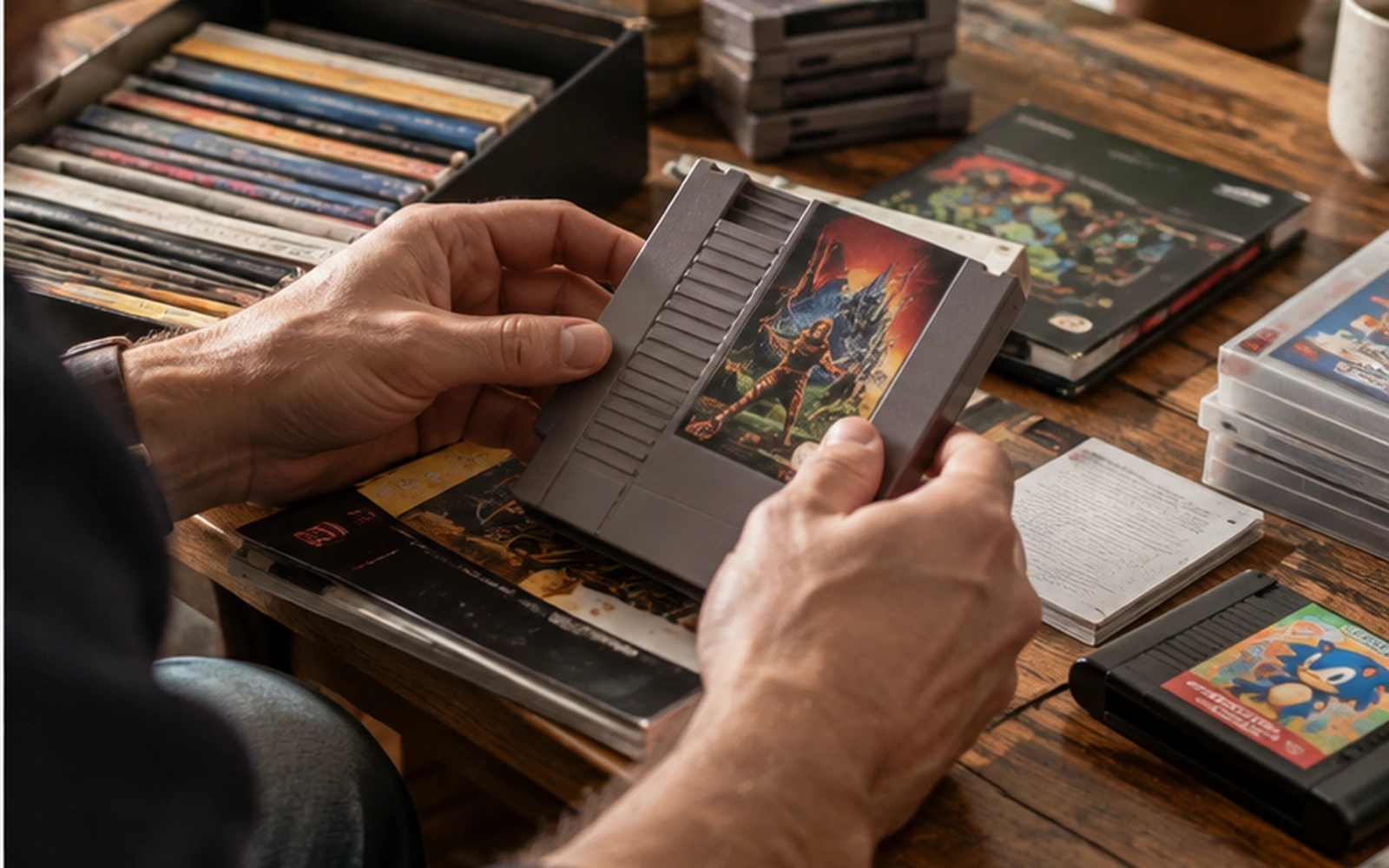
Retro collecting can become expensive quickly because nostalgia encourages impulse buys. The easiest way to stay sensible is to decide what kind of collection you are building before you start chasing individual titles.
Pick a clear collecting lane
Collecting one platform, one genre, childhood favourites or a short list of historically important games is easier than trying to own everything. A narrow focus also helps you understand normal prices and common defects.
Condition is more than the box
Check contacts, disc surfaces, battery compartments, labels, hinges and controller ports. For cartridge games, cosmetic wear may be harmless while corrosion or damaged boards can be serious. For optical games, inspect the data side under angled light and confirm the disc is the correct regional version.
Test before you pay a premium
Whenever possible, test the game and any save function. Some cartridges rely on old batteries; some optical drives struggle with marginal discs; some controllers develop drift or button failures. “Untested” should be priced as a risk, not as a promise.
Learn complete-in-box pricing separately
A loose cartridge and a complete copy with manual and inserts are different markets. Do not use the price of a mint collector copy to judge a loose game. Decide whether packaging matters to you before paying for it.
Keep a wish list and a ceiling price
For every target game, write down the maximum you are willing to pay. That single habit removes a lot of emotion from auctions and marketplace listings.
Buy games you will play
A playable collection is more satisfying than a theoretically valuable one. If a title is extremely expensive but easy to access legally through a modern re-release, you can enjoy the game first and wait for a better physical deal later.